.webp)
Green building certifications used to focus almost entirely on energy and environmental impact. The WELL Building Standard, developed and administered by the International WELL Building Institute (IWBI), takes a different angle: it certifies buildings based on how they affect the health and wellbeing of the people who use them — air quality, light, acoustics, thermal comfort, and material safety, among other factors. It's a different lens than LEED, but material choice still matters, and natural slate has a lot to offer a project team pursuing it.
WELL's Materials concept exists to reduce occupant and worker exposure to substances that are known or suspected to be harmful — things like asbestos, lead, mercury, added flame retardants, and volatile organic compounds (VOCs) that off-gas from many manufactured building products. Natural slate has a straightforward advantage here: it comes out of the ground as solid stone. There are no resins, no chemical binders, and nothing added in fabrication that would introduce the substances WELL is designed to screen out. For flooring, wall cladding, and fireplace surrounds — all interior-facing applications where occupants spend real time in close contact with the material — that's a meaningful, built-in head start rather than something achieved through a manufacturing workaround.
A few areas of the WELL v2 standard are directly relevant when natural slate is specified:
Because IWBI updates the WELL v2 standard on a rolling basis, exact feature names and point allocations can shift between registration cycles. We'd always recommend confirming current feature requirements with your project's WELL AP or the live standard directly — but the underlying material case for natural slate doesn't change: it's simple, inert, and durable, which is exactly what a health-focused standard is built to reward.
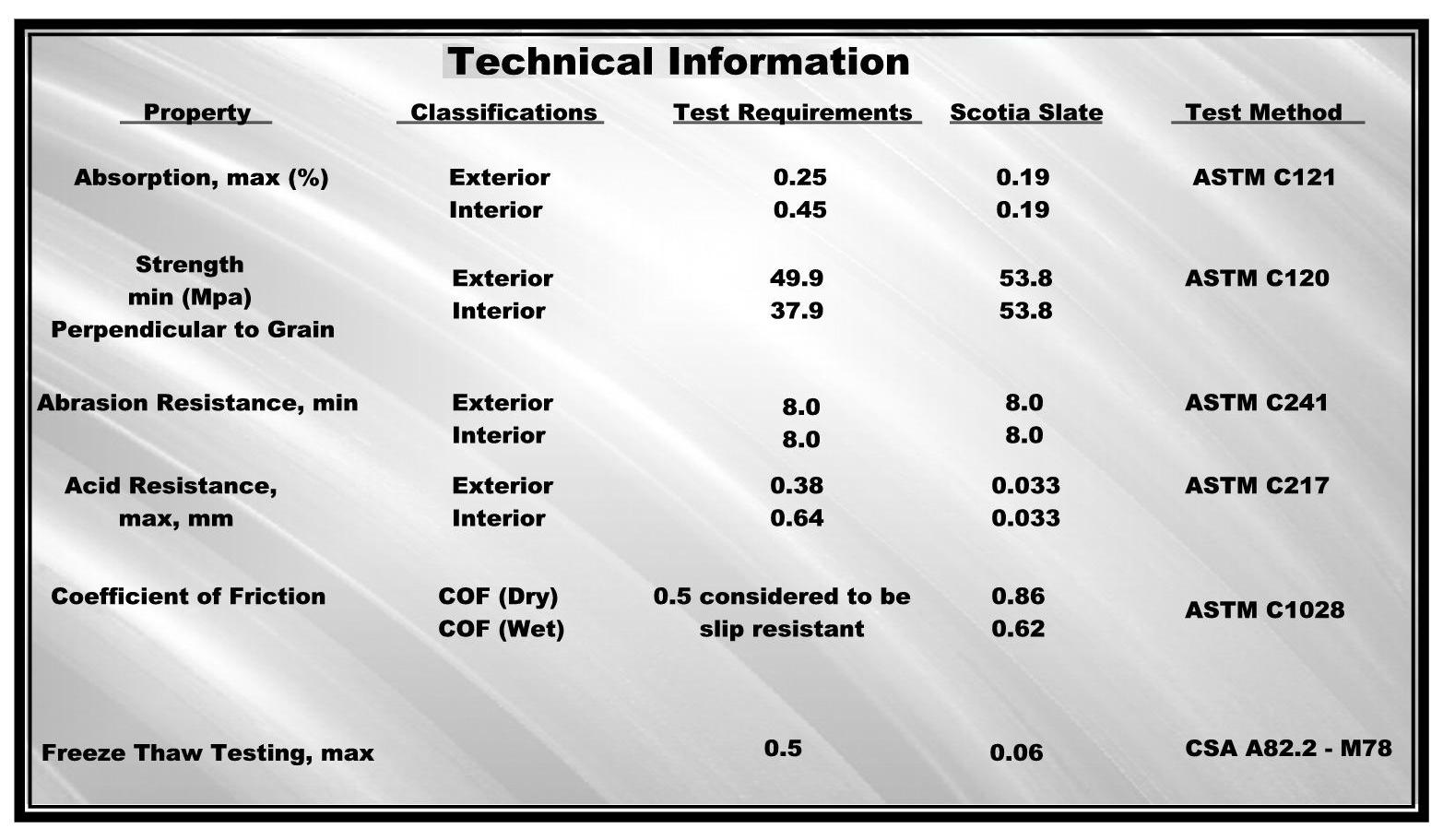
Not every stone product on the market has actually been tested to the standards a project — WELL, LEED, or otherwise — will expect documentation for. The Natural Stone Institute maintains ASTM testing guidance specifically for this reason, and it's worth knowing what to ask for before specifying or accepting a slate product:
When you're evaluating a supplier, ask directly: has this specific product been tested to these standards, and can you provide the data? The Natural Stone Institute is explicit that some stone products in the market haven't been tested at all — and where a supplier can't produce results, independent third-party testing is a reasonable ask before specifying the material into a project with certification requirements riding on it.
At Scotia Slate, our products are tested to ASTM standards across absorption, strength, abrasion resistance, and friction — the same categories that matter for both project performance and certification documentation. We've been quarrying and hand-fabricating natural slate from Nova Scotia's Meguma bedrock since 1855, and every piece leaves our mill as 100% natural stone, free of resins or added chemicals.
If you're specifying natural slate into a project pursuing WELL, LEED, or another certification, our team can walk through material documentation and testing data with you directly.